Category Archives: Updates

Part-Time Logistics Coordinator

Job Location: Tucson, AZ, with travel in Pima and Santa Cruz Counties, AZ, including regularly driving through Border Patrol interior checkpoints. 

Reports to: Desert Aid Working Group (DAWG)

Timing: Job application is open until November 12, start dates flexible between December and January

Job Structure: A 1-year part-time (15 hours per week) position without benefits is available. This part-time position works closely with and in support of the full-time Logistics Coordinator. Working hours and days may be flexible and decided in coordination with the other Logistics Coordinator and DAWG, with an expectation of some coverage and availability of at least one Coordinator during core hours of volunteer activity which sometimes falls outside of normal business hours (e.g. evening meetings, early morning trip logistics support, and emergencies).

About NMD

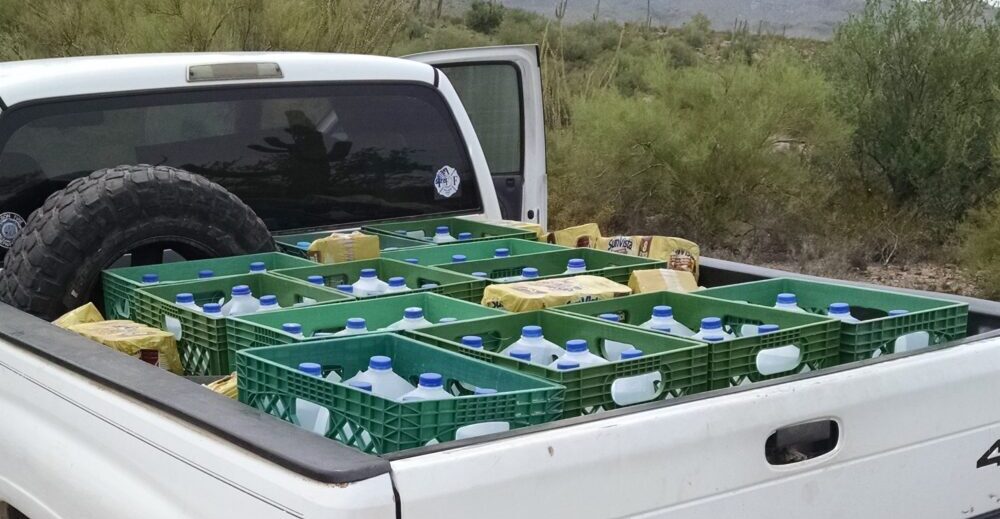
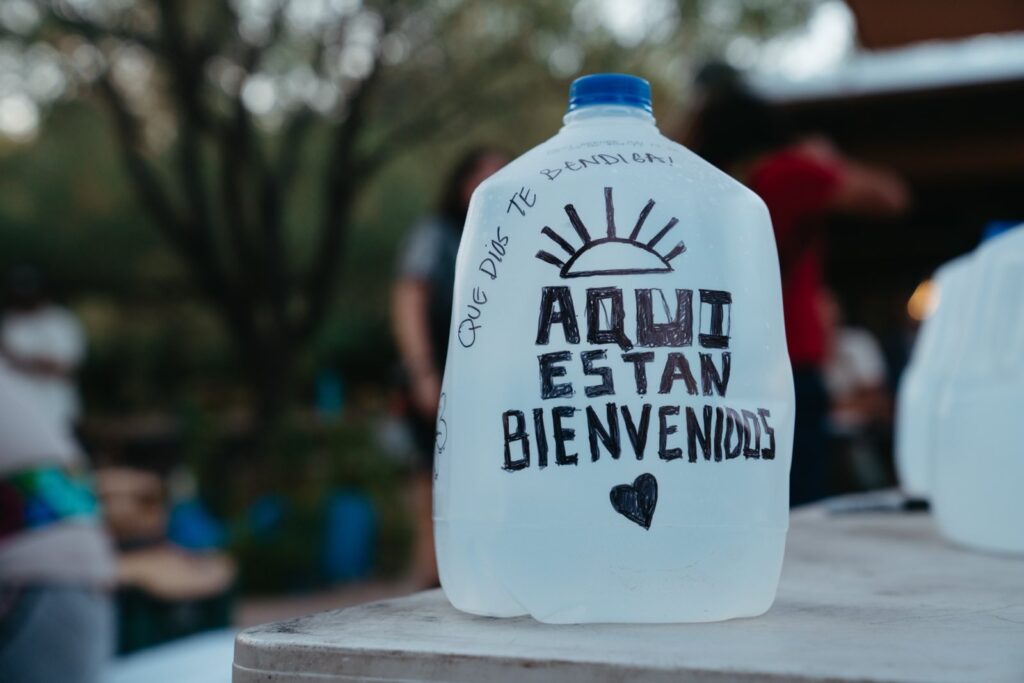
No More Deaths is a humanitarian organization based in southern Arizona since 2004 with a mission to end death and suffering in the Mexico–US borderlands through civil initiative: people of conscience working openly and in community to uphold fundamental human rights.  Our volunteer-based projects address different dimensions of the suffering caused by current policies toward migration, immigration, and border policing.  No More Deaths’ Desert Aid volunteer program maintains a year-round humanitarian presence in the deserts of southwestern Arizona. We provide humanitarian aid in the remote corridors where Prevention Through Deterrence has pushed migration routes, hiking the trails and leaving water, food, socks, blankets, and other supplies. Volunteers hike trails and leave water, food, socks, blankets, and other supplies. With support of our medical team, volunteers provide first-aid treatment to individuals in distress.

Job Summary

The Logistics Coordinators manage all logistical aspects of the No More Deaths Desert Aid volunteer program. The Logistics Coordinators are part mechanic, part administrator, part troubleshooter, and part community organizer. The Logistics Coordinators must be highly organized and able to manage many details and moving pieces, while also keeping a big-picture view of Desert Aid. The Logistics Coordinators work closely with the Volunteer Coordinators, as members of and reporting to the Desert Aid Working Group (DAWG). As the point people for desert aid operations, the Logistics Coordinators are expected to coordinate with each other and volunteers to ensure timely response to requests and needs, including in emergencies, and to delegate responsibilities effectively, making use of DAWG community resources, expertise, and volunteers. 

Roles and Key Responsibilities:

Support No More Deaths’ Desert Aid Volunteer Program:

  • Center safety of participants and visitors to NMD project sites, transportation, and activities, and model healthy boundaries and self-care.
  • Provide orientation and accompaniment to volunteers to support a welcoming, safe, efficient, and effective desert aid program
  • Visit field sites as needed 
  • Responsibly manage and use an organizational credit card for NMD expenses and provide all receipts to NMD’s Bookkeeper monthly
  • Monitor DAWG’s budget and proactively bring concerns to the Working Group.
  • Complete and/or coordinate to ensure that critical tasks are completed including timely grocery shopping, laundry, food bank, restocking of med packs, water orders, set up of rescue kits and supply inventory
  • With the Volunteer Coordinators and volunteer facilitators’ schedules, coordinate vehicle use, purchase of groceries and other supplies, transportation of facilitators and volunteers, and other events to support Desert Aid activities
  • Collect, sort, and distribute incoming material-aid donations and oversee NMD storage facilities, including the Gila Gear Lending Library
  • Respond to, troubleshoot, and pro-actively seek support to resolve emergencies and problems
  • Maintain, improve, and create systems across all No More Deaths logistics
  • Document and update processes including guidance, manuals, and resources
  • With DAWG, create and regularly update a work plan, clearly communicating time on/time off, coverage during absences, pro-actively solicit and incorporate feedback, and provide feedback to DAWG when systems or procedures aren’t working well.
  • Coordinate with the Volunteer Coordinators and/or DAWG members to represent DAWG at No More Deaths organizational meetings

Vehicle Maintenance, Repair and Coordination

  • Coordinate all vehicles coming in and out of the field and track the location, condition, and repair status of all vehicles
  • Work with the Vehicle Committee to ensure that vehicle maintenance and repairs occur promptly 
  • Make sure all volunteer drivers of NMD vehicles adhere to internal policy, procedure and practices and proactively address problems as they arise. 
  • Respond to any parking/traffic tickets, impounds, seizures, or vehicle citations
  • Support the Vehicle Committee with vehicle purchases and retirement.

Infrastructure Maintenance, Repair and Coordination

  • Monitor maintenance, repair, and condition of humanitarian aid facilities’ infrastructure including solar, water, internet, sanitation etc. 
  • Maintain grounds and interior of the volunteer spaces , including communication with landlord
  • Oversee NMD office/storeroom and office and ensure these spaces are kept clean, tidy, and accessible
  • Maintain working relationship with other facilities administrators

Basic Qualifications

  • Current drivers licence and ability to drive big trucks in urban and highway contexts is required. 4WD dirt road driving and trailering skills are a plus. 
  • Ability to lift large volumes of groceries, bulky donations, and 50 lb crates of water is required, or a strong commitment and capacity to organize volunteer support on a frequent and ongoing basis
  • Familiarity with No More Deaths Desert Aid Volunteer Program is strongly preferred, with current and former DAWG members, local volunteers, former Month-Long Volunteers, and other Desert Aid volunteer experience encouraged to apply
  • Knowledge of vehicle and infrastructure maintenance is a plus, but humility, curiosity, and willingness to learn and collaborate on troubleshooting is required 🙂
  • Community and people organizing, facilitation, training, and mentorship skills with ability to balance teaching others and completion of time-sensitive tasks
  • Proactive, resourceful, solutions-oriented, and maybe a little “camp counselor energy”
  • Familiarity with immigrant justice organizing and the specific context of militarized border policing in the Mexico–US borderlands 
  • Familiarity with mutual aid, social justice, and community organizing, including consensus decision-making and horizontal organizing preferred

Required Languages – English proficiency required, with Spanish knowledge a plus

Travel – The role requires frequent driving within Tucson and Southern Arizona, including regularly driving through Border Patrol interior checkpoints. 

Compensation: All positions in No More Deaths are paid $25 per hour. There is one part-time position available that does not include any benefits.


No More Deaths is an equal opportunity employer and strongly encourages applications from people of color, persons with disabilities, women, and LGBTQ+ applicants. Individuals with personal ties to the border or who identify as coming from an affected community are especially encouraged to apply. Thanks for your interest in this position!
APPLY NOW!

Desert Aid Trainings: Capacity Building Through Knowledge and Skill Shares

By a desert aid volunteer

No More Deaths began as a fully volunteer-run

organization, but over the years it has evolved and grown.

Thanks to the support of our donors we now provide

stipends for some volunteers and have staff positions.

However, most of the day-to-day work in the desert remains

unpaid.

People come from all over the world to support our work,

we have a base of aid workers in Southern Arizona and over

the past 21 years over 1000 people have joined us to

provide humanitarian aid in the borderlands.

For out-of-town volunteers, we offer housing, travel, and

food stipends, as well as access to our gear-lending library.

BIPOC volunteers are eligible for additional financial

support. Volunteers participate in initial in-town training

and field training before beginning their time with us. After

volunteers have spent time with us in the field, they can

become desert aid working group members where they

participate in decision-making and have access to more

trainings as well as stipends.

The work our volunteers and staff do is dynamic and

challenging, most days we have at least one team of 2-4

people driving a truck to remote areas to leave life-saving

supplies in the desert. During these trips they may come in

contact with people who are lost, injured, and in distress,

they may find somebody who has passed away. Because of

this, our training does not stop after the first week.

Volunteers and staff continuously mentor each other,

teaching new skills and coordinating trainings to better

respond to the needs of people crossing the border. Over

the past few years these are some of the trainings volunteers

and staff have attended:

Wilderness First Aid, Wilderness First Responder: In

partnership with numerous borderlands humanitarian aid

groups and with financial support from Mutual Aid Disaster

Relief and other humanitarian aid organizations, volunteers

became certified Wilderness First Aid providers and

Wilderness First Responders, free of charge. The trainings

were put on by Larkspur Rescue and NOLS. Instructorswere able to contextualize course content for the particular

environments volunteers work in.

Criminalization of Humanitarian Aid and Protocols: We

maintain that humanitarian aid is never a crime, and work

within our protocols, which have been reviewed by legal

counsel. However, we also recognize that during the current

administration, like the last Trump presidency, the targeting

of migrant communities will expand and include those who

stand in solidarity with them. Volunteers reviewed the

criminal charges that Scott Warren and others in the

organization have faced over the years and learned more

about our Foundations of Borderland Humanitarian Relief

(full document available on our website) and our desert aid

protocols. These documents are based on the Red Cross

Code of Conduct and a human rights framework.

Chainsaw Safety: Over the winter No More Deaths, along

with local Samaritans chapters and Humane Borders,

supported a camp along the border wall where asylum

seekers would often have to wait for hours or overnight to

be picked up by Border Patrol. NMD’s main contribution

was firewood. We hosted a chainsaw safety course for

volunteers to learn how to cut firewood down to size. The

course was put on by volunteers who work as arborists and

wildland firefighters.

Media Interviews and Public Presentation: The No More

Deaths’ Media Coordinators put on a training for volunteers

and staff to learn about No More Deaths talking points and

media strategy, as well as reviewing materials made for

public presentations and outreach.

Do you have a skill you would be willing to share with our

volunteers? Please reach out!

Possible topics include wilderness medicine, know your

rights, meeting facilitation, search and rescue/recovery,

vehicle maintenance, overland navigation, conflict

mediation, and many more! Remote and Southern Arizona

opportunities are appreciated.

Stories of Solidarity: Missing Migrant Hotline

by Operator 17

Greetings NMD community! I’m Operator 17, and I’m

experience. Each month, we receive hundreds of calls from

excited to share a glimpse into the Missing Persons Hotline

people across the Americas—each one seeking answers,

support, and connection as they search for missing loved

ones. Our role as Hotline Operators is to provide

compassionate assistance, offer helpful resources, and

collaborate closely with Emergency Report Operators to

relay information to Border Patrol agents.

Recently, we’ve seen a shift in the nature of calls. As border

traffic has slowed with recent administrative changes, many

inquiries now focus on detention facilities. We frequently

use the ICE locator website to help families find detained

individuals and keep lines of communication open.

Unfortunately, we also receive harassing calls from

individuals attempting to intimidate operators with hateful

language. In response, No More Deaths remains steadfast in

prioritizing the safety and well-being of all team members,

offering mental health support and solidarity.

Beyond the calls, the Hotline team actively engages in

community events to raise awareness and foster connection.

It’s hard work—but meaningful, human, and sometimes

even heartwarming. Thanks for being part of this journey

with us—we’re in this together, one call at a time.

HOTLINE STATS:

Calls (July 2024 – May 2025): 954

Emergency Reports (July 2024 – May 2025): 9

Alive (July 2024 – May 2025): 4

Dead (July 2024 – May 2025): 0

UNKNOWN (July 2024 – May 2025): 4

EMERGENCY REPORTS OPERATOR

Application Deadline: October 12, 2024
Start Date: November 6, 2024
Apply Here: https://form.jotform.com/242536227479161

At No More Deaths, we are seeking an Emergency Reports Operator to join the Missing Persons Hotline Team. This role involves contacting Border Patrol agents to initiate searches for missing persons and collaborating with No More Deaths partners and community groups on both sides of the border. The operator will respond to family members’ requests and provide humanitarian, civil, and non-violent assistance in addressing the missing persons crisis in the border areas, ensuring compassionate and effective support for those in need.

About No More Deaths

We are a humanitarian organization based in southern Arizona, functioning as a ministry under our fiscal sponsor, the Unitarian Universalist Church of Tucson. Our mission is to end migrant death and suffering through civil initiative while defending fundamental human rights within our community. Guided by transformative justice values, we operate as a non-hierarchical organization. This means that employees are expected to actively participate in various operational functions and attend organizational meetings. Our non-hierarchical structure promotes collaboration and inclusivity by distributing key responsibilities—such as decision-making, conflict resolution, staffing, finance, communications with allied groups, and event planning—across all employees.

Job Duties and Responsibilities

The Emergency Report Operator will work both from our Tucson office and remotely. Duties include:

Emergency Reporting and Communication

  • Utilize information and coordinates from the Hotline Operator to determine appropriate Border Patrol stations and make emergency reports.
  • Make calls to Border Patrol for emergency or active cases and request searches for missing persons.
  • Follow up and maintain communication every two hours with Border Patrol via phone and email.
  • Maintain communication with the Hotline Operator every two hours, relaying information from Border Patrol and updating them until the case is closed.
  • Collect and document information during interactions, including filing notes, recordings, and logs as needed.

Community and Team Engagement

  • Collaborate with working group members to plan, organize, and participate in local community projects and team events, ensuring flexibility in scheduling as needed.
  • Accompany and support community members to their immigration court appointments, as needed.
  • Actively participate in group meetings, offering feedback and collaborating on projects while engaging with the community on humanitarian efforts

Training and Development

  • Attend training courses offered by the team to enhance job performance and stay informed on current operations, projects, and political climate changes.

Communication and Support

  • Maintain consistent communication with all working group members, responding promptly to messages via Signal and WhatsApp.
  • Remain calm, composed, and focused while performing tasks in stressful situations.

Requirements

Language Proficiency

  • Fluent in Spanish, with proficiency in English preferred.

Local Residency

  • Residency in Tucson.

Communication Skills

  • Ability to communicate effectively with individuals in distress, handle high-stress situations, and maintain composure in intense or emotionally charged conversations.

Team Collaboration

  • Ability to effectively contribute as a team member within the Missing Persons Hotline.
  • Demonstrates respectful, empathetic, and collaborative communication with working group members.

Preferred Qualifications

  • Experience with Communication Tools: Experience using Signal and WhatsApp.
  • Technical Skills: Basic computer proficiency and ability to multitask effectively.

Contract Conditions

  • Duration and Renewal: 12-month contract with the option for annual renewal, subject to qualitative assessment at three and six months.
  • Training and Observation: Includes a two-week training period and a 90-day paid observation period.
  • Work Hours: 30 hours per week.
  • Hotline active hours: Monday – Friday, 8:00 am to 10:00 pm
  • Compensation: Monthly salary of $22 per hour.
  • Work Materials: Provided work materials include a phone, laptop, and hotspot.

Our Package Includes

  • Work Model: Hybrid model with 50% work from home.
  • Benefits: Flexible PTO and Winter Vacation, medical and dental coverage.

No More Deaths value diversity and strongly encourages applications from people of color, people with disabilities, women, and LGBTQ+ individuals. We especially welcome candidates with personal ties to the border or those who come from affected communities. U.S. citizenship is not a requirement. No More Deaths is an equal opportunity employer.

BORDER PATROL LEAVES HUNDRED OF ASYLUM SEEKERS STRANDED IN THE COLD, DETAINS AND THREATENS AID WORKERS ATTEMPTING TO RESPOND

Approximately 400 asylum seekers waited along the border wall near Sasabe, Arizona yesterday, in hopes of being picked up by Border Patrol. 

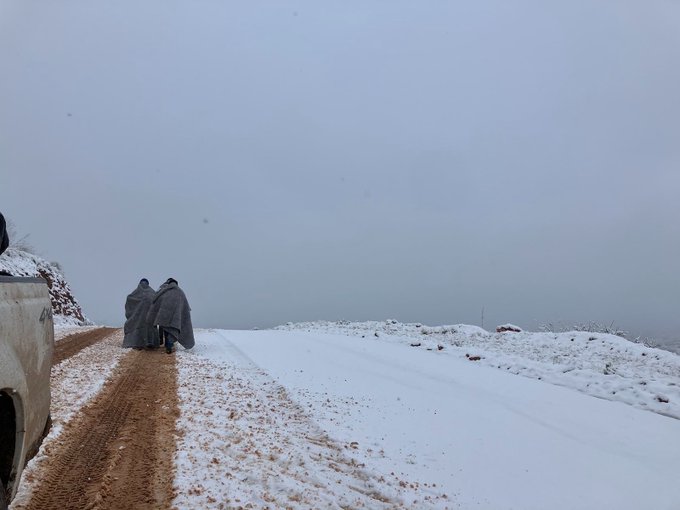
Border Patrol never came. During the night, snow and freezing temperatures set in. By this morning, a few inches of snow had accumulated and humanitarian aid volunteers found hundreds of people still stranded along the wall with no sign of a Border Patrol response. 

Volunteers with No More Deaths, Tucson Samaritans, and Green Valley Samaritans began evacuating people to the Border Patrol Station in Sasabe. Many volunteers were detained and threatened with arrest by Border Patrol agents who said that they were informed of the situation but did not plan to drive out to address it. As the snow melted and road conditions turned muddy, volunteer vehicles continued to evacuate people despite threats of arrest in anticipation of more dangerously cold conditions tonight.

Now, Border Patrol is refusing to allow more people into the station to be processed. At the time of writing, there are over 250 adults and children left exposed to the elements outside of the Sasabe station. Despite persisting for over three months, Border Patrol has failed to adequately allocate resources to address this ongoing crisis.
People cannot be left out in such life-threatening conditions. A response must be enacted now to establish adequate shelters, warming centers, and other basic necessities for those who seek safety and asylum in Sasabe.