Category Archives: Updates

EMERGENCY REPORTS OPERATOR

Application Deadline: October 12, 2024
Start Date: November 6, 2024
Apply Here: https://form.jotform.com/242536227479161

At No More Deaths, we are seeking an Emergency Reports Operator to join the Missing Persons Hotline Team. This role involves contacting Border Patrol agents to initiate searches for missing persons and collaborating with No More Deaths partners and community groups on both sides of the border. The operator will respond to family members’ requests and provide humanitarian, civil, and non-violent assistance in addressing the missing persons crisis in the border areas, ensuring compassionate and effective support for those in need.

About No More Deaths

We are a humanitarian organization based in southern Arizona, functioning as a ministry under our fiscal sponsor, the Unitarian Universalist Church of Tucson. Our mission is to end migrant death and suffering through civil initiative while defending fundamental human rights within our community. Guided by transformative justice values, we operate as a non-hierarchical organization. This means that employees are expected to actively participate in various operational functions and attend organizational meetings. Our non-hierarchical structure promotes collaboration and inclusivity by distributing key responsibilities—such as decision-making, conflict resolution, staffing, finance, communications with allied groups, and event planning—across all employees.

Job Duties and Responsibilities

The Emergency Report Operator will work both from our Tucson office and remotely. Duties include:

Emergency Reporting and Communication

  • Utilize information and coordinates from the Hotline Operator to determine appropriate Border Patrol stations and make emergency reports.
  • Make calls to Border Patrol for emergency or active cases and request searches for missing persons.
  • Follow up and maintain communication every two hours with Border Patrol via phone and email.
  • Maintain communication with the Hotline Operator every two hours, relaying information from Border Patrol and updating them until the case is closed.
  • Collect and document information during interactions, including filing notes, recordings, and logs as needed.

Community and Team Engagement

  • Collaborate with working group members to plan, organize, and participate in local community projects and team events, ensuring flexibility in scheduling as needed.
  • Accompany and support community members to their immigration court appointments, as needed.
  • Actively participate in group meetings, offering feedback and collaborating on projects while engaging with the community on humanitarian efforts

Training and Development

  • Attend training courses offered by the team to enhance job performance and stay informed on current operations, projects, and political climate changes.

Communication and Support

  • Maintain consistent communication with all working group members, responding promptly to messages via Signal and WhatsApp.
  • Remain calm, composed, and focused while performing tasks in stressful situations.

Requirements

Language Proficiency

  • Fluent in Spanish, with proficiency in English preferred.

Local Residency

  • Residency in Tucson.

Communication Skills

  • Ability to communicate effectively with individuals in distress, handle high-stress situations, and maintain composure in intense or emotionally charged conversations.

Team Collaboration

  • Ability to effectively contribute as a team member within the Missing Persons Hotline.
  • Demonstrates respectful, empathetic, and collaborative communication with working group members.

Preferred Qualifications

  • Experience with Communication Tools: Experience using Signal and WhatsApp.
  • Technical Skills: Basic computer proficiency and ability to multitask effectively.

Contract Conditions

  • Duration and Renewal: 12-month contract with the option for annual renewal, subject to qualitative assessment at three and six months.
  • Training and Observation: Includes a two-week training period and a 90-day paid observation period.
  • Work Hours: 30 hours per week.
  • Hotline active hours: Monday – Friday, 8:00 am to 10:00 pm
  • Compensation: Monthly salary of $22 per hour.
  • Work Materials: Provided work materials include a phone, laptop, and hotspot.

Our Package Includes

  • Work Model: Hybrid model with 50% work from home.
  • Benefits: Flexible PTO and Winter Vacation, medical and dental coverage.

No More Deaths value diversity and strongly encourages applications from people of color, people with disabilities, women, and LGBTQ+ individuals. We especially welcome candidates with personal ties to the border or those who come from affected communities. U.S. citizenship is not a requirement. No More Deaths is an equal opportunity employer.
BORDER PATROL LEAVES HUNDRED OF ASYLUM SEEKERS STRANDED IN THE COLD, DETAINS AND THREATENS AID WORKERS ATTEMPTING TO RESPOND

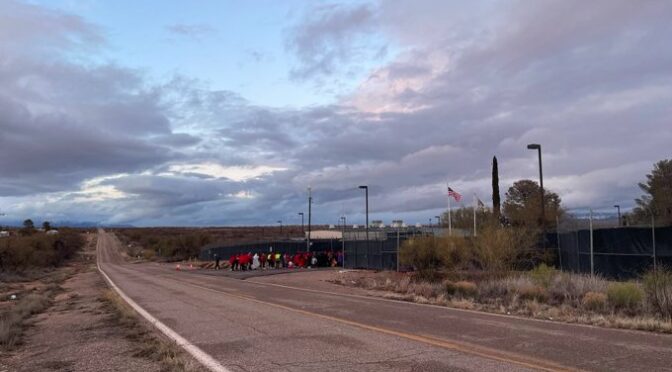
Approximately 400 asylum seekers waited along the border wall near Sasabe, Arizona yesterday, in hopes of being picked up by Border Patrol. 

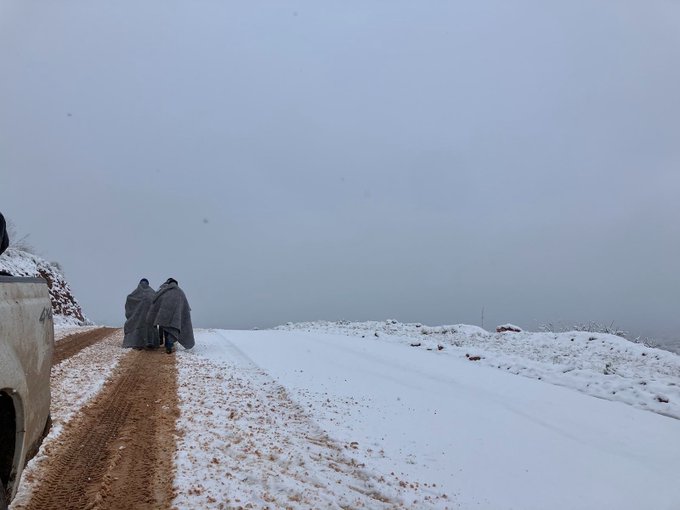
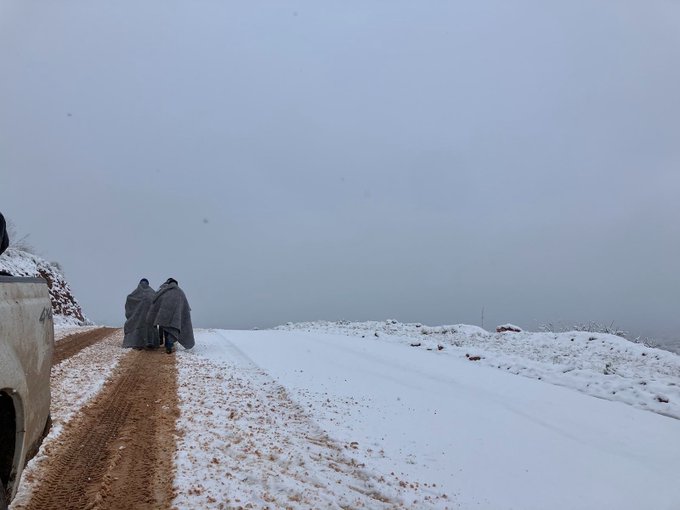
Border Patrol never came. During the night, snow and freezing temperatures set in. By this morning, a few inches of snow had accumulated and humanitarian aid volunteers found hundreds of people still stranded along the wall with no sign of a Border Patrol response. 

Volunteers with No More Deaths, Tucson Samaritans, and Green Valley Samaritans began evacuating people to the Border Patrol Station in Sasabe. Many volunteers were detained and threatened with arrest by Border Patrol agents who said that they were informed of the situation but did not plan to drive out to address it. As the snow melted and road conditions turned muddy, volunteer vehicles continued to evacuate people despite threats of arrest in anticipation of more dangerously cold conditions tonight.

Now, Border Patrol is refusing to allow more people into the station to be processed. At the time of writing, there are over 250 adults and children left exposed to the elements outside of the Sasabe station. Despite persisting for over three months, Border Patrol has failed to adequately allocate resources to address this ongoing crisis.
People cannot be left out in such life-threatening conditions. A response must be enacted now to establish adequate shelters, warming centers, and other basic necessities for those who seek safety and asylum in Sasabe.

Border Patrol Leaves Hundreds of Asylum Seekers Stranded in the Cold, Detains and Threatens Aid Workers Attempting to Respond

Inches of snow fell along the border wall near Sasabe, Arizona this weekend

Approximately 400 asylum seekers waited along the border wall near Sasabe, Arizona yesterday, in hopes of being picked up by Border Patrol. 

Border Patrol never came. During the night, snow and freezing temperatures set in. By this morning, a few inches of snow had accumulated and humanitarian aid volunteers found hundreds of people still stranded along the wall with no sign of a Border Patrol response. 

Volunteers with No More Deaths, Tucson Samaritans, and Green Valley Samaritans began evacuating people to the Border Patrol Station in Sasabe. Many volunteers were detained and threatened with arrest by Border Patrol agents who said that they were informed of the situation but did not plan to drive out to address it. As the snow melted and road conditions turned muddy, volunteer vehicles continued to evacuate people despite threats of arrest in anticipation of more dangerously cold conditions tonight.

Now, Border Patrol is refusing to allow more people into the station to be processed. At the time of writing, there are over 250 adults and children left exposed to the elements outside of the Sasabe station. Despite persisting for over three months, Border Patrol has failed to adequately allocate resources to address this ongoing crisis.

People cannot be left out in such life-threatening conditions. A response must be enacted now to establish adequate shelters, warming centers, and other basic necessities for those who seek safety and asylum in Sasabe.

Border Patrol Neglects Asylum Seekers in Winter Storm, Threatens Aid Workers with Arrest

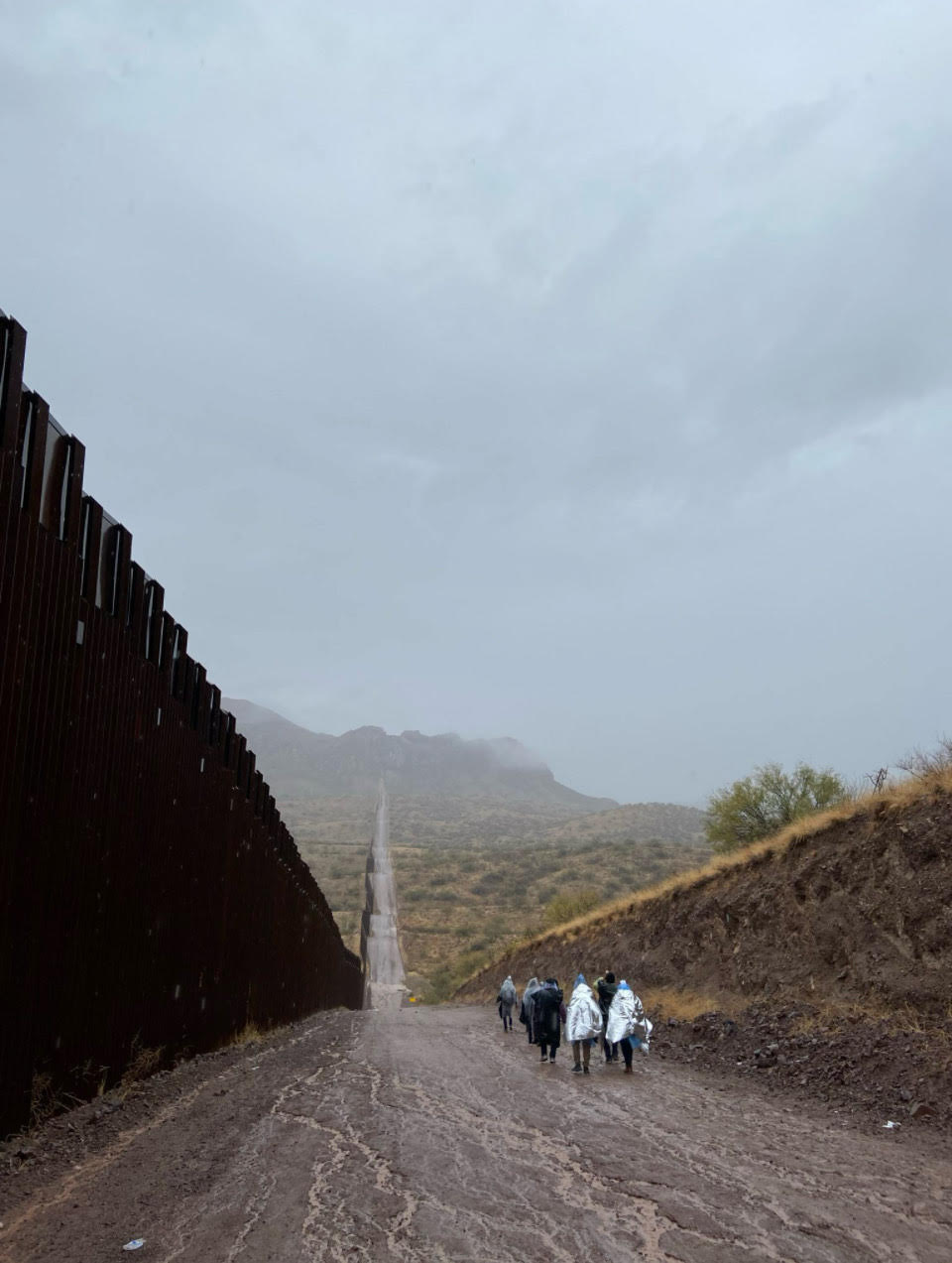
The road along the border wall near Sasabe

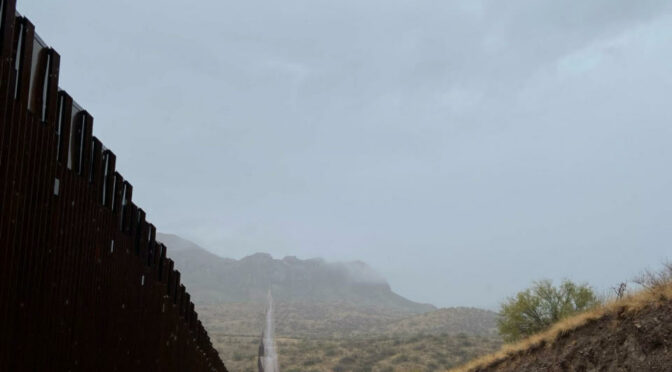
SASABE, Arizona – Last night, humanitarian aid workers scrambled to triage and support 300 asylum seekers stranded along the border wall east of Sasabe, Arizona. A winter storm blew in, dumping rain upon the hundreds of men, women, children, and babies left without adequate shelter in the remote location. Recognizing the urgency of the situation, volunteers notified Border Patrol that they would be driving asylum seekers to the Sasabe substation to be processed, to get them out of the life-threatening cold.

Volunteers were told that this was illegal. Meanwhile, Border Patrol agents refused to send personnel to the area, citing road conditions and limited space in vehicles as the reason for their lack of response. They advised volunteers to call 911 if there was a medical emergency.

The message from Border Patrol was loud and clear: you’re on your own.

Despite the constraints of providing humanitarian aid in a place where cell phone service is limited and the nearest ambulance is two hours away, humanitarian aid volunteers did place multiple calls to 911. Through the rainy day and the frigid night, no emergency services arrived.   “Without us volunteers everybody would have died. Everybody would have died,” one volunteer responding to the situation said. “With no tarps, no rain gear, no food, and no water, 300 adults, elders, and children could have died from exposure. We were a group of 8-15 volunteers triaging 300 people, trying to prevent hundreds of deaths. We cannot keep this up. We are not meant for this. We need bigger resources and responses.”  

There are still hundreds of people stranded along the wall, waiting to be picked up by Border Patrol.

REPORT FINDS ARIZONA 911 DISPATCHERS FAIL TO HELP LOST MIGRANTS

Tanvi Misra, High Country News, 14 November 2023

On June 27, 2022, around 1:44 a.m., a man lost in the desert outside Tucson, Arizona called 911. An emergency services dispatcher for Pima County answered. The man, clearly distressed, tried to describe his surroundings and explain that he was lost, wet and freezing. But before he could finish, the dispatcher interrupted him, saying, “I don’t understand, un momento,” and abruptly transferred the call to the U.S. Border Patrol. The agent who picked up shushed the caller as he started to speak —“Cállate!” (“Be quiet!”) — and spoke to the dispatcher instead, in English. Then they hung up, leaving the man to the agent. An incident report suggests that no actions were taken to follow up or locate the lost caller: “No additional calls have come from the subject. … At this time the caller has not been identified and not located.” 

Continue reading

Caring for the Deceased, Caring for the Living

by Bees, Desert Aid worker
from the Winter 2022 newsletter – read it here!

I have mixed feelings about writing this piece about death in the desert.

Our organization is named No More Deaths; our stated mission is “to end death and suffering in the Mexico-US borderlands.” Death is central here, I know. But so much has already been written about the US government’s choice to use the desert as a weapon of genocide, and journalists have produced copious portraits of individual volunteers coming across deceased people at the border.

Let me first tell you, if I may, about the delight.

Let me tell you about getting my ass kicked in pick-up basketball by teenagers who had been walking through the desert for weeks. Let me tell you about how many times I’ve explained “Yes, you have correctly identified the English word for chicken, but Chicken of the Sea is not, in fact, chicken.” Let me tell you about meeting people who hadn’t had access to clean water in days and telling them (truthfully) that they smelled better than the ragtag crew of punks dropping fresh gallons and food around the Altar Valley.

Let me tell you about a man who had spent nearly a month trying to get through the Sonoran Desert on foot, whose eyes filled with tears when he spoke about the desert because to him the plants, the birds, the sunrises blossoming across the mountains, were all so wonderful. “The desert is beautiful,” he said.

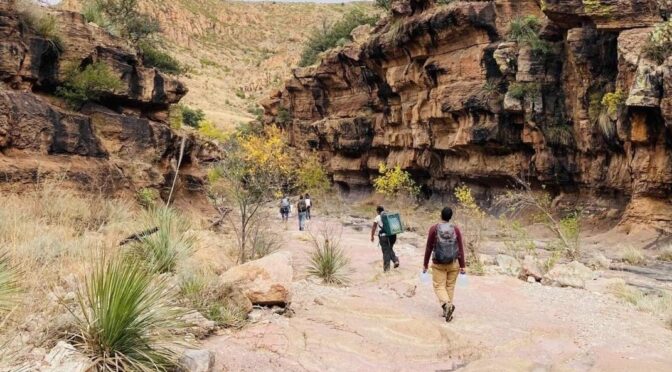
In August, No More Deaths volunteers working around Arivaca found the remains of four recently deceased migrants. Death is central here, and yet none of the longer term volunteers can recall finding so many people in so short a time in this particular corridor. The desert is wonderful and terrible all at once.

Let me tell you, if I may, about the care and compassion of people in the desert.

One man explained to me why it’s difficult to report deceased people on the trails, even to humanitarian aid workers. “It’s dangerous, you know? If I tell somebody I saw a body, maybe they’ll decide I’m responsible for it. Maybe they call the police.” And then, risk be damned, that man proceeded to tell me where he saw someone who had died and made me promise that we would go look for that person. In fact, undocumented people reported three of the deceased people that we found*, ensuring that we could recover them quickly and help their families find a measure of closure.

When it would be easy to prioritize rage and anguish, I see volunteers prioritize care. People who have had traumatic experiences with law enforcement hike for miles with police to ensure a person is retrieved quickly and with dignity. Volunteers take photos of the surrounding landscape so families can see where their loved ones passed away. Atheists place flowers and pray. Cynical feelings arise in me and I wonder if these gestures are useful. Then I speak with a relative of one of the men who died.

I was in the group that found your loved one. We picked flowers and prayed for him, and for your family.

We pray for you too. Please, if you can tell me, what was it like where he died?

It was peaceful and beautiful. I know that sounds strange, but it was.

That’s good. That is helpful to hear.

Please let us know if there is anything we can do for your family.

Thank you for telling me. Thank God my cousin was found.

What the magazine profiles do not describe is that when we find people in the desert, we care for the people who walk on these trails, for their families, and for ourselves. They care for us in return, sharing food with us, sharing stories with us, asking how they can help us, and praying for us (forgiving any non-believers). Volunteers forgive each other for speaking clumsily and imprecisely, for responding from trauma and anger, for not doing and thinking everything with absolute perfection. One particularly hard day I share a feeling – that these people died close to where we leave gallons and it’s hard not to feel haunted by that – and no one shames me for it.

My fellow volunteers know the truth as well as I do. We could drop hundreds of gallons of water on every trail in the desert, and people would still die. They die because of settler colonialist violence, extraction economies, and imperialism. Because Border Patrol agents are paid to scatter and terrorize and kidnap people, instead of help them. Because horror is central to US border policy and no quantity of water can wash the blood off the hands of the people who write it. Because of a lack of care that is antithetical to so many of us in the desert.

I once met someone who carried a member of his group on his back so she could make it through alive. Another who assumed tremendous personal risk to ensure ailing people could receive urgent medical treatment. Another who reported a deceased person with the full knowledge that he might be blamed for that person’s death. I never found a way to contact the man who reported the deceased person directly to us to assure him we kept our promise, but I did run into a group who had walked the same trail. They were relieved someone cared enough to search, and then asked if we knew his name or where he was from. They intended to pray for him and his family. I told them we went to recover the body and saw that police treated the person with respect, and they asked me if I was okay.

Major publications construct a landscape of ceaseless adrenaline rushes – guides abandoning groups, cartels exacting exorbitant sums from the destitute, brutality of Border Patrol agents, death on the trails – and it feels like strange pathos porn, bordering on romanticization of the worst of humanity. What I would like to offer is that there is also care here, and I have seen the best in people.

I do not ignore or erase the despair in this work, nor do I pretend away the violence. Simply: I agree with the man who told me the desert is beautiful. If you have ever lost someone close to you then you know what this feels like. Your loved one is dead, light shines through the trees, a baby giggles in your arms, the world continues to turn, and the person you loved most in the world is dead. I was present on three occasions when we found people. There were wildflowers everywhere, birds singing sweet and clear around us, creeks flowing gently in the background. We cared for the deceased, and we cared for the living.

This is what I ask us to remember when we read other stories about the border, when despair and doubt settle in to stay for a while, when the challenges feel insurmountable and endless: many awful stories are true, and so are many wonderful ones. Terrible things happen, and we can provide comfort in spite of it all.

Death is central here, and care is all around.

Author’s note: I am a white settler who grew up in the Great Lakes region, not the desert. This piece is written from that perspective, and I intend to represent no one’s experiences but my own.

*Undocumented people who witness a deceased person on the trails cannot easily report to law enforcement without facing apprehension, deportation, and other legal repercussions, as well as potential scrutiny for that person’s death. For this reason No More Death’s Missing Migrant Hotline and other search and rescue hotlines are integral to finding and recovering people quickly. For more information on how Border Patrol and other law enforcement agencies fail to recover missing people and even prevent their recovery, visit http://www.thedisappearedreport.org/.