
Written by Operator 17
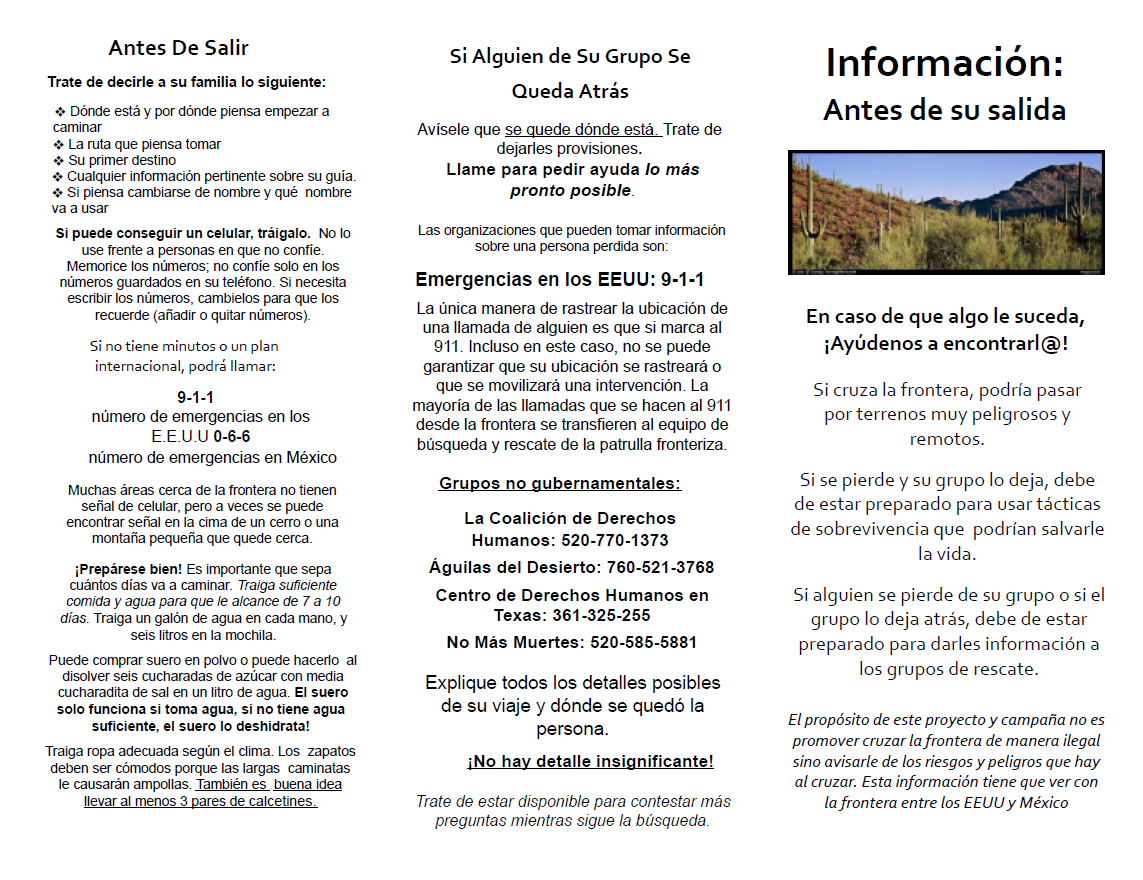
This new brochure made by the Missing Migrant Hotline Team is a practical guide for people crossing the borderlands desert. A landscape where a wrong turn or a dead phone battery can become life-threatening. It opens with preparation before the journey even begins, then walks through the hard decisions that arise once someone is on the move. One of the most urgent pieces of advice: conserve your cellular device’s battery so you can reach 911 or allied groups like No More Deaths. If someone in your group gets left behind, the instruction is clear: call for help as soon as you can, and when you do, give every detail you can. If you provide coordinates, you or the person left behind must not move from that location. Staying put is what allows rescuers to find you.
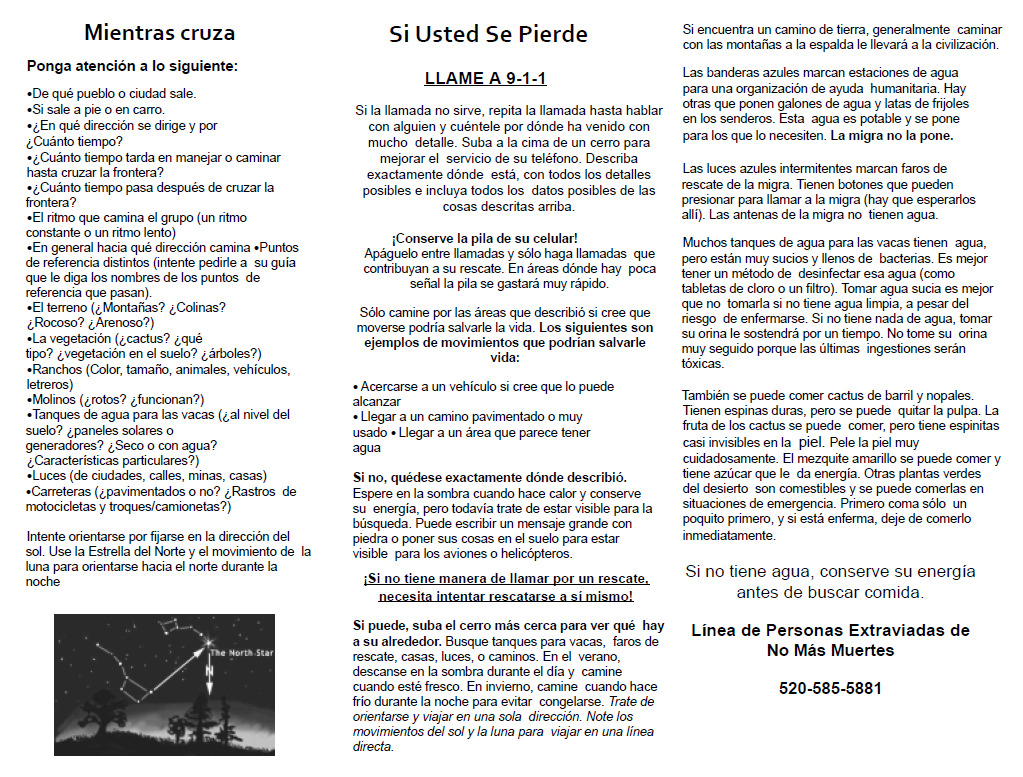
The brochure also addresses the disorienting reality of getting lost in open desert. It covers cardinal directions and how to navigate by the North Star, giving someone a way to reorient when landmarks fail. And it doesn’t sugarcoat the hardest scenario: if no one can save you, you must save yourself. That means staying aware of your surroundings, climbing to a high peak to bring attention to yourself, and if you’re out of water, conserve your energy before you look for food. It’s blunt, but the bluntness comes from care. Every page is written for someone who may have no one else to rely on, and every instruction is aimed at getting them through another hour, another night, another day.
No one should have to cross the desert without information that could save their life.
Un salvavidas en el desierto: un nuevo recurso para migrantes
Este nuevo folleto elaborado por el equipo de la Línea Directa para Migrantes Desaparecidos es una guía práctica para quienes cruzan el desierto fronterizo. Un paisaje en el que un giro equivocado o una batería de celular agotada pueden poner en peligro la vida. Comienza con los preparativos antes de que el viaje siquiera comience y luego repasa las difíciles decisiones que surgen una vez que alguien está en camino. Uno de los consejos más urgentes: ahorra la batería de tu celular para poder comunicarte con el 911 o con grupos aliados como No More Deaths. Si alguien de tu grupo se queda atrás, la instrucción es clara: pide ayuda tan pronto como puedas y, cuando lo hagas, da todos los detalles que puedas. Si proporcionas coordenadas, ni tú ni la persona que se quedó atrás deben moverse de ese lugar. Quedarse en el mismo sitio es lo que permite a los rescatistas encontrarlos.
El folleto también aborda la desorientadora realidad de perderse en el desierto abierto. Abarca los puntos cardinales y cómo orientarse con la Estrella Polar, lo que brinda una forma de reorientarse cuando los puntos de referencia fallan. Y no edulcora el escenario más difícil: si nadie puede salvarte, debes salvarte tú mismo. Eso significa estar atento a tu entorno, subir a una cima alta para llamar la atención y, si te quedas sin agua, conservar tu energía antes de buscar comida. Es directo, pero esa franqueza surge del cuidado. Cada página está escrita para alguien que tal vez no tenga a nadie más en quien confiar, y cada instrucción tiene como objetivo ayudarle a sobrevivir otra hora, otra noche, otro día.
Nadie debería tener que cruzar el desierto sin la información que podría salvarle la vida.