As the government cracks down on humanitarian aid, my case may set a dangerous precedent.
By Scott Warren
AJO,
Ariz. — After a dangerous journey across Mexico and a difficult
crossing through the Arizona desert, someone told Jose and Kristian that
they might find water and food at a place in Ajo called the Barn. The
Barn is a gathering place for humanitarian volunteers like me, and there
the two young men were able to eat, rest and get medical attention. As
the two were preparing to leave, the Border Patrol arrested them. Agents
also handcuffed and arrested me, for — in the agency’s words — having
provided the two migrants with “food, water, clean clothes and beds.”
Jose
and Kristian were detained for several weeks, deposed by the government
as material witnesses in its case against me and then deported back to
the countries from which they had fled for their lives. This week, the
government will try me for human smuggling. If convicted, I may be
imprisoned for up to 20 years.
In the Sonoran
Desert, the temperature can reach 120 degrees during the day and plummet
at night. Water is scarce. Tighter border policies have forced migrants
into harsher and more remote territory, and many who attempt to
traverse this landscape don’t survive. Along what’s become known as the
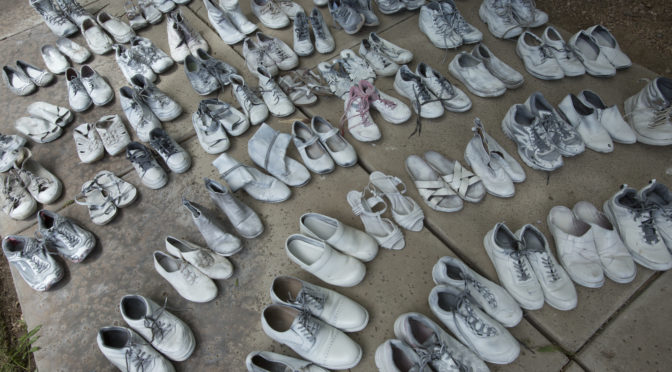
Ajo corridor, dozens of bodies are found each year; many more are
assumed to be undiscovered.
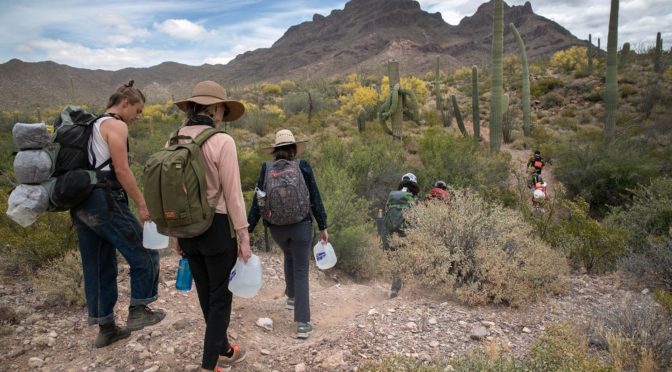
Local
residents and volunteers organize hikes into this desert to offer
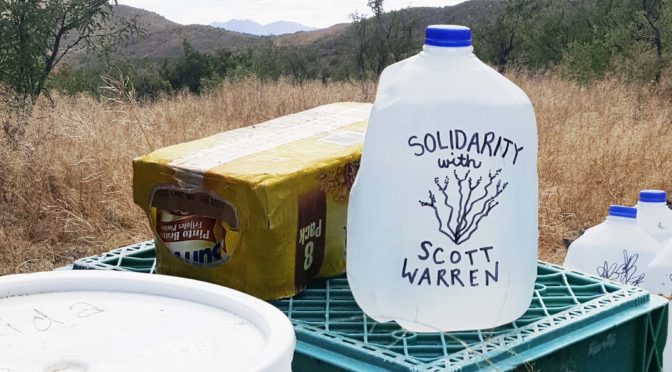
humanitarian aid. We haul jugs of water and buckets filled with canned
food, socks, electrolytes and basic first-aid supplies to a few sites
along the mountain and canyon paths. Other times, we get a report that
someone has gone missing, and our mission becomes search and rescue —
or, more often, to recover the bodies and bones of those who have died.
Over
the years, humanitarian groups and local residents navigated a
coexistence with the Border Patrol. We would meet with agents and inform
them of how and where we worked. At times, the Border Patrol sought to
cultivate a closer relationship. “Glad you’re out here today,” I
remember an agent telling me once. “People really need water.” In a town
as small as Ajo, we’re all neighbors, and everybody’s kids go to the
same school. Whether it was in the grocery store or out in the field, it
was commonplace for residents and volunteers to run into Border Patrol
agents and talk.
Those kinds of encounters are rare these days. Government authorities have cracked down on humanitarian aid: denying permits to enter the Cabeza Prieta National Wildlife Refuge, and kicking over and slashing water jugs. They are also aggressively prosecuting volunteers. Several No More Deaths volunteers have faced
possible imprisonment and fines of up to $10,000 on federal misdemeanor
charges from 2017 including entering a wildlife refuge without a permit
and “abandonment of property” — leaving water and cans of beans for
migrants. (I face similar misdemeanor charges of “abandonment of
property.”)
My case in particular may set a
dangerous precedent, as the government expands its definitions of
“transportation” and “harboring.” The smuggling and harboring laws have
always been applied selectively: with aggressive prosecutions of
“criminal” networks but leniency for big agriculture and other
politically powerful industries that employ scores
of undocumented laborers. Now, the law may be applied to not only
humanitarian aid workers but also to the millions of mixed-status
families in the United States. Take, for instance, a family in which one
member is undocumented and another member, who is a citizen, is buying
the groceries and paying the rent. Would the government call that
harboring? If this family were driving to a picnic in the park, would
the government call that illegal transportation? Though this possibility
would have seemed far-fetched a few years ago, it has become
frighteningly real.
The Trump administration’s
policies — warehousing asylees, separating families, caging children —
seek to impose hardship and cruelty. For this strategy to work, it must
also stamp out kindness.
To
me, the question that emerges from all of this is not whether the
prosecution will have a chilling effect on my community and its sense of
compassion. The question is whether the government will take seriously
its humanitarian obligations to the migrants and refugees who arrive at
the border.
In Ajo, my community has provided
food and water to those traveling through the desert for decades — for
generations. Whatever happens with my trial, the next day, someone will
walk in from the desert and knock on someone’s door, and the person who
answers will respond to the needs of that traveler. If they are thirsty,
we will offer them water; we will not ask for documents beforehand. The
government should not make that a crime.
As told to Post editor Sophia Nguyen.