
Archivo de la etiqueta: abuse documentation

Newly Released – El Paso Sector Migrant Death Map and Database

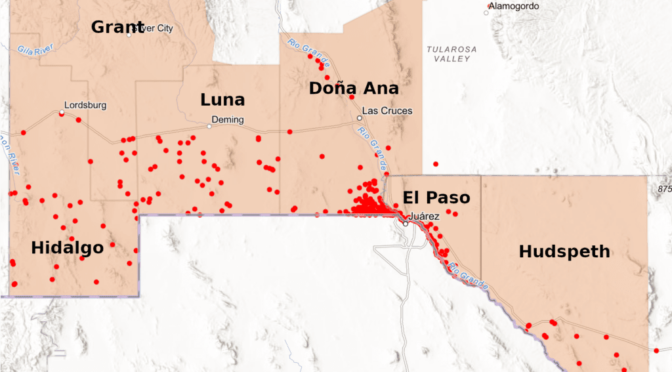
On March 18, No More Deaths released a searchable map, database, and report documenting the upsurge in migrant deaths in the New Mexico and the far West Texas borderlands. The “El Paso Sector Migrant Death Database” provides the most comprehensive account to date of the past 15 years of migrant deaths along the US/Mexico border in CBP’s El Paso Sector, which includes all of New Mexico, as well as El Paso and Hudspeth counties in Texas. 

The El Paso Sector Migrant Death Database comprises a downloadable database and map, similar to the OpenGIS Initiative for Deceased Migrants published by Humane Borders for the state of Arizona, along with a report briefly analyzing this data. We found that:

  • CBP is undercounting migrant deaths in the El Paso Sector: From 2012 to 2022, our database shows a higher number of deaths than CBP’s data for the sector, with some years showing as much as two, three, or even four times (in 2020) as many deaths.
  • 15% of all migrant deaths were caused by use of force, wall falls, Border Patrol chases, or were deaths that occurred in custody. CBP’s records report only a fraction of these CBP-related deaths. In some cases, field investigators stated that they were obstructed from performing a proper investigation or from interviewing BP agents involved in a death.
  • Along with a sharp increase in overall deaths in BP’s El Paso Sector, women now account for more deaths than men, a statistic unprecedented anywhere else along the border, for any year. One explanation for this is the increasing inability of people to seek asylum at official ports of entry, which forces people not prepared for a desert journey into more remote areas.
  • Remains are increasingly recovered closer to populated areas. While the US border policy of Prevention Through Deterrence initially drew inspiration from the “success” of El Paso’s Operation Hold The Line in pushing migrants away from urban areas, our data show that, due to increased border militarization, an urban area can be essentially as dangerous and deadly as the middle of nowhere.

Demands and recommendations

CBP and the agency’s Office of Professional Responsibility (OPR) have time and again proven themselves dishonest in their accounting of migrant deaths and of CBP-related deaths. In this report, we reveal one small piece of what is missing from their data. But data and transparency will never bring back the lives lost, or stop the ongoing crisis of death and disappearance that is a direct result of US border policy. The only way to prevent the death and suffering that have become so commonplace in the US-Mexico borderlands is to end the policy of Prevention Through Deterrence, abolish the US Border Patrol, and dismantle the border barriers that have divided so many communities. At a minimum, we demand the following:

  1. While CBP should make good on its obligation to the GAO to provide complete data on migrant deaths and take transparency seriously, their accounting will never be trustworthy. Entities independent of border enforcement agencies must provide oversight, data collection, and accountability, working with state and county medical examiners, justices of the peace, law enforcement, and other organizations to make their data reflect the best information available. 
  1. CBP and the OPR must apply CBP-related death designations consistently and transparently, and allow outside oversight of this process.
  1. Restrictions on asylum, like Texas’ Senate Bill 4, or those proposed by the White House and US senators for 2024, will cause death, injury, and suffering on the US-Mexico border, as people escaping violence, poverty, and climate change are forced to find alternative ways to enter the United States. In accordance with US and international law, CBP must open ports of entry to asylum seekers and remove all restrictions on access to the asylum process, including illegal policies of turnbacks and metering.
  1. End the practices of vehicle and foot chases which have made CBP the deadliest federal law enforcement agency in the nation.
  1. The border wall is a humanitarian disaster. Our data show the number of deaths caused by the wall are far higher than CBP reports. Walls have not reduced migration, but serve only to cause untold suffering; they must all be taken down.


NUEVO INFORME: «Aislamiento y Muerte» revela un sistema discriminatorio de llamadas al 911 en la frontera entre EE.UU. y México

TUCSON, ARIZONA – El 14 de noviembre, No Más Muertes hizo público su cuarto informe Aislamiento y muerte: segregación de los servicios de emergencia 911 en la frontera de Arizona. El informe es la nueva entrega de Desaparecidos, una serie que examina el papel de la Patrulla Fronteriza en la crisis de desaparición y muerte en masa en las tierras fronterizas entre Estados Unidos y México. 

Aislamiento y muerte analiza el sistema de respuesta a emergencias del Sheriff del Condado de Pima y la segregación de las llamadas al 911 en la región fronteriza. Las conclusiones del informe arrojan luz sobre un sistema discriminatorio en el que se asignan respuestas tremendamente distintas a las personas que llaman en función de su estatus de ciudadanía percibido. En el caso de las personas que emigran a través de la región, sus llamadas de auxilio al 911 se transfieren habitualmente a la Patrulla Fronteriza, una agencia que ya ha demostrado una negligencia mortal cuando se trata de respuesta a emergencias y rescate. 

Del informe:

«En marzo de 2018, un hombre contactó al 911 once veces en el transcurso de diez horas. Estaba perdido y solo. Con el pasar de las horas, su condición se deterioró y su voz se apagaba con cada llamada. Los operadores de 911 continuaron transfiriendo su llamada a la Patrulla Fronteriza cada vez que él llamaba, pese a que la agencia no parecía estar llevando a cabo un rescate. El propio equipo de Búsqueda y Rescate del condado nunca fue notificado, y el condado nunca activó una búsqueda para él.

Al fin, el hombre dejó de llamar. Se desconoce el resultado de su caso.»

El equipo de No Más Muertes revisó miles de llamadas al 911 y tomó testimonio de voluntarios de ayuda humanitaria, además de otras fuentes de datos relevantes. En el 99% de las llamadas en las que se presumía que la persona que llamaba era indocumentada, no se llevó a cabo ninguna admisión o evaluación, en el 68% de las llamadas el despachador carecía de fluidez en español para poder comunicarse eficazmente y el 50% de las personas que llamaron no recibieron ningún aviso antes de ser transferidas a la Patrulla Fronteriza. 

«La segregación de llamadas basada en la presunta condición de inmigrante no sólo es ilegal, sino que las consecuencias de tales prácticas son mortales,» afirma Parker Deighan, una de los colaboradores del informe. «Las conclusiones de este informe plantean serias dudas sobre la complicidad del condado en la actual crisis de muertes y desapariciones.»

Sólo en 2023, se han encontrado los restos de 175 personas en Arizona. Innumerables más siguen desaparecidas.

NEW REPORT: “Separate and Deadly” Reveals Discriminatory 911 Call System in US/Mexico Borderlands

TUCSON, Arizona – On November 14th, No More Deaths released Separate and Deadly: Segregation of 911 Emergency Services in the Arizona Borderlands. The report is the latest installment of Disappeared, a four-part series that examines Border Patrol’s role in the crisis of mass death and disappearance in the U.S.-Mexico borderlands.

Separate and Deadly analyzes the Pima County Sheriff’s Department’s emergency response system and the segregation of 911 calls in the border region. The findings of the report shed light on a discriminatory system in which vastly different responses are allocated to callers based on their perceived citizenship status. For people migrating through the region, their distress calls to 911 are customarily transferred to Border Patrol – an agency that has already demonstrated a deadly negligence when it comes to emergency response and rescue.

From the report:

“In March 2018, a man contacted 911 eleven times over the course of ten hours. He was lost and alone. As the hours passed, his condition clearly deteriorated, and his voice began to fade. It appeared that Border Patrol was not actively searching for him… Pima County dispatchers continued to transfer his call to Border Patrol every time he called… The county’s own Search and Rescue team was never notified, and the county never activated a search for him. Eventually the man stopped calling. The outcome of his case is unknown.”

The No More Deaths team reviewed thousands of 911 calls and took testimony from humanitarian aid volunteers, in addition to other relevant data sources. In 99% of the calls where the caller was presumed to be undocumented, no intake or assessment was conducted, in 68% of the calls the dispatcher lacked fluency in Spanish to be able to communicate effectively and 50% of the callers were given no notice before being transferred to Border Patrol. 

“Not only is call segregation based on presumed immigration status unlawful, the consequences of such practices are deadly,” says Parker Deighan, one of the report’s contributors. “The findings of this report raise serious questions about the county’s complicity in the ongoing crisis of death and disappearance.”

In 2023 alone, the remains of 175 people have been found in Arizona. Countless more remain disappeared.